
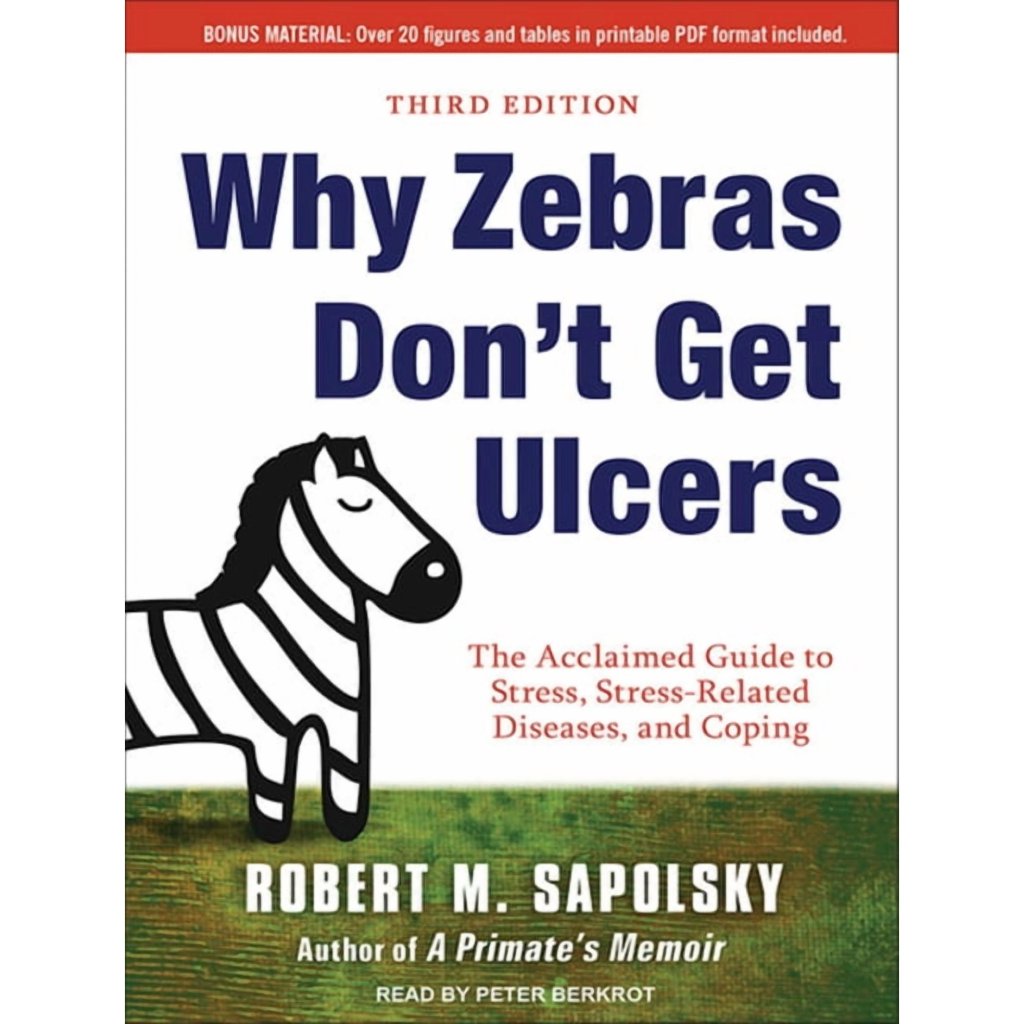
The book “Why Zebras Don’t Get Ulcers: A Guide to Stress, Stress-related Diseases, and Coping” by Robert M. Sapolsky explores the profound and damaging effects of chronic psychological stress on the human body, contrasting it with the short-lived, physical stress experienced by animals in the wild, like zebras.
The core premise is that the human stress response system, which evolved for acute physical emergencies (the “fight-or-flight” scenario), becomes destructive when constantly activated by purely psychological and social stressors common in modern life (like worrying about finances, deadlines, or social status). Zebras face a crisis (a lion) that is intense but brief, after which their stress response shuts off and their body returns to normal. Humans, however, keep the system running, which is the root cause of stress-related diseases.
The Biology of the Stress Response
The body’s stress response is a coordinated system designed to mobilize energy for survival. It involves two main pathways:
- Nervous System (Fast Response): The Sympathetic Nervous System (SNS) is activated, releasing epinephrine (adrenaline) and norepinephrine. This causes an immediate surge in heart rate, blood pressure, muscle tension, and alertness, all to prepare for rapid action.
- Hormonal System (Slower Response): The Hypothalamic-Pituitary-Adrenal (HPA) axis is activated, leading to the release of glucocorticoids (like cortisol). These hormones are essential for long-term energy mobilization (converting stored energy into glucose) and suppressing non-essential functions.
The Consequences of Chronic Stress
When the stress response is repeatedly or chronically activated for non-physical threats, the short-term beneficial effects turn into long-term destructive damage. The organs and systems that are temporarily suppressed or ramped up for a quick crisis begin to break down, leading to a wide range of diseases:
- Cardiovascular System: Constantly elevated blood pressure and heart rate due to chronic stress cause cumulative wear and tear on blood vessels. This accelerates the buildup of plaque, leading to hypertension, heart attacks, and stroke.
- Metabolism and Energy: Chronic glucocorticoid release keeps blood sugar high, constantly mobilizing energy. Over time, cells become less responsive to insulin, increasing the risk of Type 2 Diabetes. It can also promote fat storage, particularly visceral fat.
- Immune System: Stress initially enhances certain immune functions but eventually suppresses overall immunity to conserve energy. Chronic stress, particularly chronic high cortisol, makes the body vulnerable to infectious diseases and can worsen autoimmune disorders.
- Reproductive System: Since reproduction is not essential for immediate survival, the stress response suppresses it. Chronic stress can lead to fertility issues (amenorrhea in women, erectile dysfunction in men) and low libido.
- Brain and Cognition: Chronic stress damages the hippocampus (the area critical for learning and memory) and can cause the amygdala (the fear center) to become hyper-reactive, leading to impaired memory, anxiety disorders, and depression.
Psychological and Social Modulators of Stress
Sapolsky’s research, including his studies of baboons, highlights that stress is not just about the event itself, but how we perceive and respond to it. The following psychological and social factors determine how damaging a stressor will be:
- Control and Predictability: Stress is more damaging if you believe you have no control over the stressor, or if the timing of the stress is unpredictable. The perception of control, even if illusory, is a powerful stress buffer.
- Outlets for Frustration: Having a healthy, non-destructive way to release the energy mobilized by the stress response (like exercise, hobbies, or even venting) lessens its negative impact.
- Social Support: Strong social connections and a feeling of belonging are among the most effective buffers against stress. Conversely, social isolation and low social rank are significant risk factors for stress-related disease.
- Worsening vs. Improving: Believing that things are getting worse is far more stressful than believing they are getting better, even if the current situation is still difficult.
In the end, the book argues that because humans cannot eliminate their uniquely psychological stressors, the most effective coping mechanisms involve finding ways to turn off the stress response when it’s not needed by manipulating the perceptions of control, predictability, and social connectedness, and by having outlets for frustration.




 Jazbaat Help Center
अपने सुझाव, अनुभव और टिप्पणी यहां लिखें-