
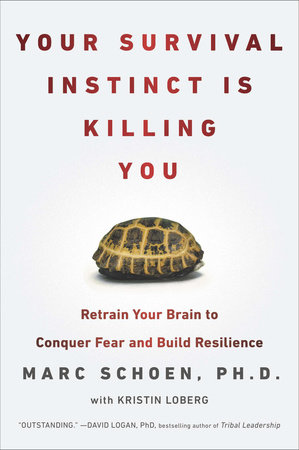
Dr. Marc Schoen’s book, “Your Survival Instinct Is Killing You: Retrain Your Brain to Conquer Fear and Build Resilience,” argues that the greatest threat to well-being in the 21st century isn’t a lack of comfort, but the chronic, inappropriate activation of the primitive survival instinct in response to minor discomforts and everyday stress. The book provides an extremely detailed focus on the consequences of this unchecked stress across physical, psychological, and behavioral domains.
The Core Problem: The Over-Reactive Survival Instinct
The central premise is that in our comfortable modern world, our Discomfort Threshold has sunk to an all-time low. The limbic brain’s fight-or-flight system (which served our ancestors by reacting to predators) is now triggered by non-life-threatening stressors like a traffic jam, an unexpected email, or even the feeling of slight hunger. This makes the brain overly sensitive, keeping the stress response “stuck in the ‘ON’ position” with severe consequences.
Detailed Consequences of Chronic, Misplaced Stress
The book connects this chronic state of vigilance to a wide range of maladaptive behaviors, physical illnesses, and cognitive impairment.
1. Psychological and Emotional Dysfunction
- Anxiety and Phobias: The constant feeling of being threatened leads to chronic anxiety and can manifest as panic attacks in mildly stressful situations. The instinct’s misfiring is the root cause of many avoidance behaviors and specific phobias (e.g., fear of flying, agoraphobia).
- Emotional Reactivity: Individuals become irritable, overwhelmed, and easily triggered, losing their temper for seemingly minor reasons because their stress response is always on high alert.
- Impaired Relationships: The instinct can cause people to close down to love or intimacy due to past heartache, interpreting vulnerability or disappointment as a life-threatening emotional danger.
2. Physical and Health Consequences
When the survival instinct is activated, it floods the body with stress hormones like cortisol and adrenaline. When this becomes chronic, it causes significant damage:
- Cardiovascular System: Prolonged high stress leads to elevated blood pressure (hypertension) and places undue strain on the heart, significantly contributing to the risk of heart disease and stroke.
- Immune System Suppression: Sustained high cortisol levels suppress the immune system, making the individual highly susceptible to infections and illnesses. Schoen explores how stress can also exacerbate existing conditions, contributing to their chronic nature.
- Chronic Pain and Physical Symptoms: The constant muscle tension associated with a perpetual fight-or-flight state leads to chronic conditions like tension headaches, back pain, and generalized muscle aches.
- Digestive Issues: Non-essential systems, like digestion, are shut down during the survival response. Chronic stress disrupts this system, contributing to various digestive issues and exacerbating conditions like irritable bowel syndrome (IBS).
- Sleep Disturbances: The brain’s perpetual state of vigilance prevents the insomniac from sleeping, as the survival instinct interprets the vulnerability of sleep as a threat, keeping the person on alert.
3. Behavioral and Maladaptive Coping Mechanisms
The drive to alleviate the uncomfortable feeling of a triggered survival instinct leads people to adopt maladaptive habits that provide temporary relief but worsen the overall problem:
- Addictions and Dependencies: The survival instinct is the culprit that triggers a reliance on quick comforts to silence the alarm. This can manifest as reliance on drugs, alcohol, or excessive caffeine as a form of self-medication.
- Overeating/Emotional Eating: Hunger, even mild hunger, is interpreted as a threat to survival, which is why the instinct can trigger a person to overeat or engage in emotional eating to immediately quell the discomfort.
- Avoidance and Procrastination: The discomfort associated with a difficult task or potential failure triggers the instinct, leading to procrastination and avoidance behaviors that ensure short-term comfort at the expense of long-term goals.
4. Cognitive Impairment
The brain under chronic stress is not an optimal thinking machine.
- Poor Decision-Making: When the limbic system is in overdrive, it shuts down the prefrontal cortex (the rational, problem-solving part of the brain). This causes individuals (like an executive under pressure) to unravel and make poor, instinctive decisions rather than rational, considered ones.
- Impaired Performance Under Pressure: The constant activation leads to an inability to perform optimally in high-stakes situations, as the brain is focused on survival rather than performance.
- Damage to Brain Structure: Prolonged exposure to high levels of cortisol can cause physical changes in the brain, particularly in the hippocampus (memory) and amygdala (emotion regulation), leading to impaired cognitive function and emotional instability.
The Solution: Gladiator Discomfort Training
The core solution presented is to retrain the brain to disconnect the association between discomfort and imminent danger. Dr. Schoen’s approach, termed Gladiator Discomfort Training (GDT), is about building a higher tolerance for discomfort and uncertainty, effectively teaching the limbic brain that a difficult day or minor annoyance is not a signal to panic. By embracing vulnerability and facing discomfort in small, managed ways, one can tame the overly reactive survival instinct and relegate it back to its original role: protecting you from actual life-threatening harm.




 Jazbaat Help Center
अपने सुझाव, अनुभव और टिप्पणी यहां लिखें-